
The initiative to culturally vitalize and diversify the region remains central to the mission of the Carinthian International Jazz Award. By fostering an environment that actively supports artistic expression, the CIJA provides a platform for outstanding young jazz musicians to present their work while gaining meaningful performance and career opportunities. This international orientation—welcoming applicants from across the globe—reflects music’s capacity to transcend geographical and cultural boundaries.
Although the CIJA was traditionally a saxophone competition, since the 2026 edition, the competition is open to all instruments. This expansion maintains the core artistic focus of the CIJA while broadening its scope for this commemorative year.
The annual structure of the CIJA ensures continuity, offering a consistent platform for emerging artists. By maintaining an age limit of under 30, the competition supports musicians in a critical developmental phase, providing visibility and professional engagement at an early stage of their careers.
A central principle of the CIJA is fairness in evaluation. The use of audio-only submissions ensures that all applicants are assessed purely on musical merit, minimizing external bias and emphasizing artistic quality.
How the Competition Works
Application Deadline: TBA
Finalists Announced: TBA
Submission:
Send a link to audio files to: carinthiajazz@gmail.com
Eligibility:
Open to all instruments. Applicants must be under 30
Finals:
TBA (in person)
Arnoldstein, Austria
Application Guidelines:
See below
Prizes
1st Place: TBA
2nd Place: TBA
3rd Place: TBA
Audience Choice Award: Gift Basket
Finalist Support
All finalists will be provided with complimentary hotel or Airbnb accommodation (dates TBD), as well as transportation within Austria.
Application
- Fill out the registration form
- Submit the payment of the application
- Send the link to your audio file. Follow the instructions below.


How to Pay
Application Fee:
€34 (Early Bird, until May 31, 2026)
€49 (Regular, June 1 – June 20, 2026)

CIJA Registration Fee
€34.00
How to Apply
APPLICATION FILE GUIDELINES
Submit ONE LINK TO AN AUDIO FILE containing TWO CONTRASTING PIECES. The two selections must be from two different categories.:
Category 1 Ballads: E.g.: “Body and Soul” or similar.
Category 2 Bebop: E.g.: “Donna Lee,” “Anthropology,” or similar.
Category 3 Blues: E.g.: “Tenor Madness,” “Billie’s Bounce,” or similar.
Category 4 Standard: E.g.: “There Will Never Be Another You,” or similar.
Category 5 Latin: E.g.: “Recorda Me,” “Blue Bossa,” or similar.
- You have to be accompanied by a backing track or other musicians.
- The performance must be no longer than 6 minutes in total.
- Adjudicators will not listen to your file before we have received your application fee.
Meet the Judges
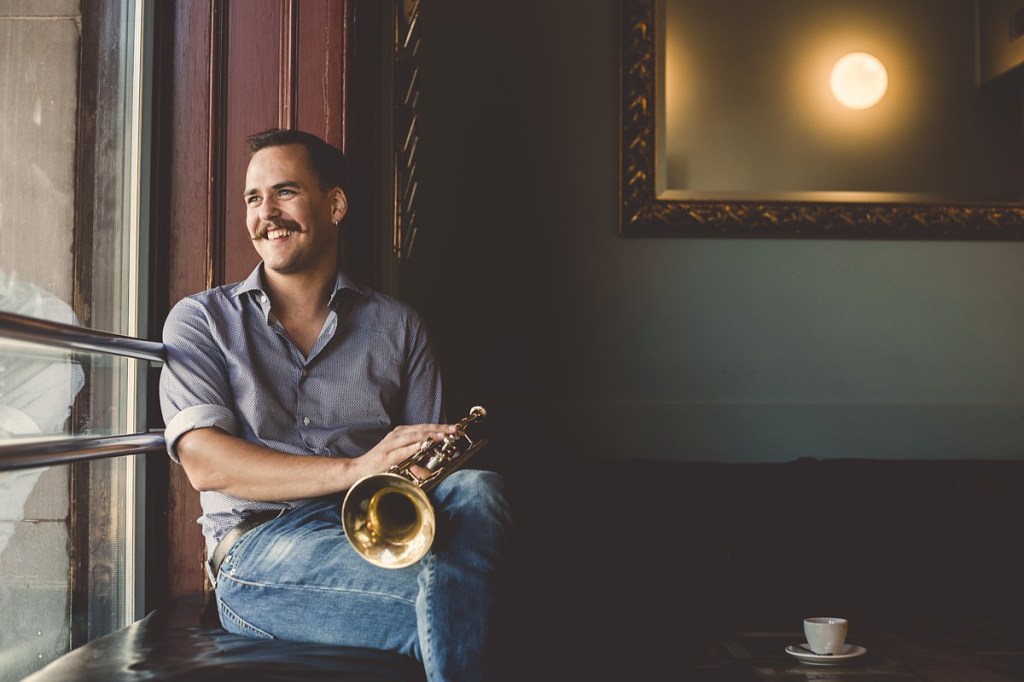
Nolan Quinn is a trumpet player, composer, and producer born and raised in Lugano, Switzerland, who has built himself a solid reputation for his stylistic versatility and as a specialist in the Jazz language. He started playing the trumpet at the age of nine, continued his classical studies, and obtained a Master of Arts in Music Performance Jazz in Bern in 2014. Since then, he has played more than six hundred live performances for a wide variety of productions and live broadcasts on television and radio, and has toured throughout Europe and the United States of America. His concert activity has led him to share the stage with many of the world’s best internationally recognized instrumentalists and singers, such as Paul Anka, DJ Bobo, Tony Momrelle, Frank Dellé, Rick Margitza, Lutz Häfner, Guillermo Klein, Bobby Watson, Mathias Rüegg, and Olivier Ker Ourio, to name only a few. In Switzerland, he worked for many years with the Swiss Jazz Orchestra, the Swiss Army Big Band, and as first trumpet in musical productions at the Theater St. Gallen and for the Thunerseespiele. At the same time, Nolan Quinn has pursued his compositional work for his own Jazz quartet and Jazz quintet, releasing three albums: «Dreaming of a Place Unseen» in 2014, «Soothin’» in 2017, and «Dusty West» in 2019. Two of these recordings were made in collaboration with the Swiss Broadcasting Corporation (RSI Rete Due) and can also be heard on Radio Swiss Jazz. For this purpose, he founded the record label Rhinoceros Jazz Records in 2017. Many of his productions have been supported by the Swiss Arts Council and the cultural funds of the Republic and Canton of Ticino, the Canton of Berne, the City of Berne, and the City of Lucerne. As a music author, he has registered more than fifty compositions at SUISA, Switzerland, ranging from chamber music to electronic music. In 2022, he was conferred the Swiss Jazz Award. With his regular appearances in the most important Jazz clubs and Jazz festivals in Switzerland, he succeeds in raising the interest of an ever-wider audience for his artistic work.

Hans Lassnig-Walder is the chief conductor and arranger of the kelagBIGband, whose infrastructure allows him to work regularly with international and regional soloists. In collaboration with other large ensembles (e.g., Kärntner Landesjugendchor, EURO Symphony SFK, Girardi strings), his attention as a composer and arranger is focused on developing a sound that reflects the landscape, languages, and mentalities of the Alps-Adriatic region. Hans Lassnig-Walder has been an integral member of the CIJA since its founding in 2018.

Marcus Ratka is a guitarist, composer, music theorist, and co-founder of JAM MUSIC LAB Private University for Jazz and Popular Music Vienna, where he serves as Rector, Managing Director, and University Professor of Theory, Arrangement, and Composition. He is also a co-founder of the prestigious Ö1 Jazz Scholarship. An internationally active musician and educator, he has collaborated with artists including Joe Zawinul, Branford Marsalis, and Peter Erskine and regularly serves as a jury member for international music competitions.
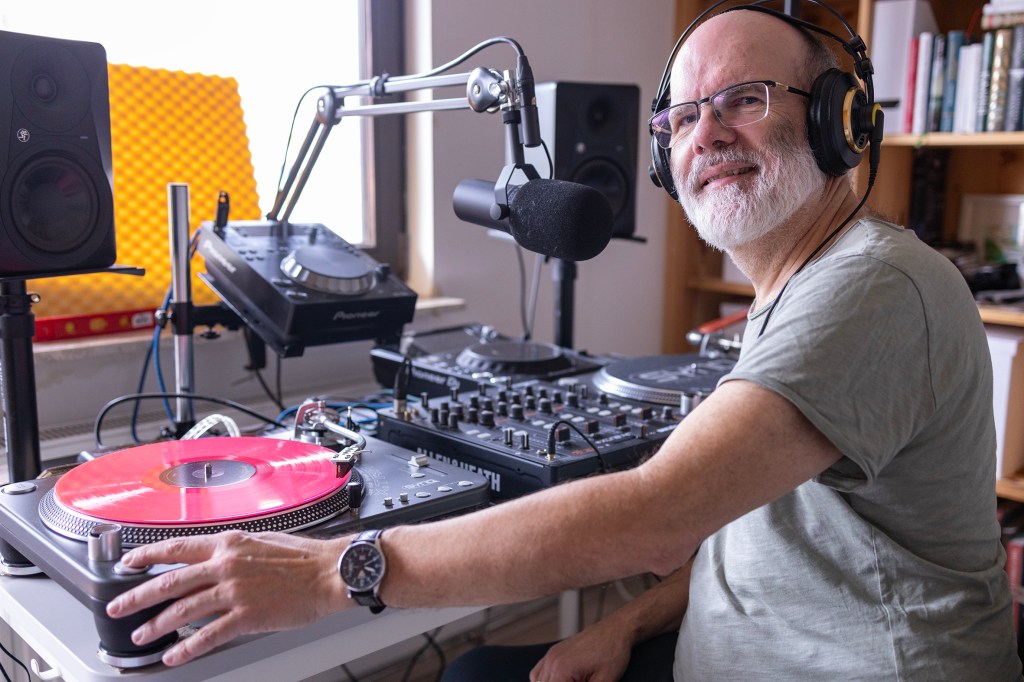
Gilbert Waldner grew up in Klagenfurt and studied philosophy in Graz. He began working as a cultural journalist covering theater, literature, and jazz in Carinthia in the mid-1980s. Even when his career path took him into business, he remained loyal to jazz. He has been writing concert reviews, reviews of new albums, portraits of musicians, and more for decades. In 2007, two monthly two-hour radio programs in the “Take the Jazztrain” format were added for Radio Agora, which he now produces himself.
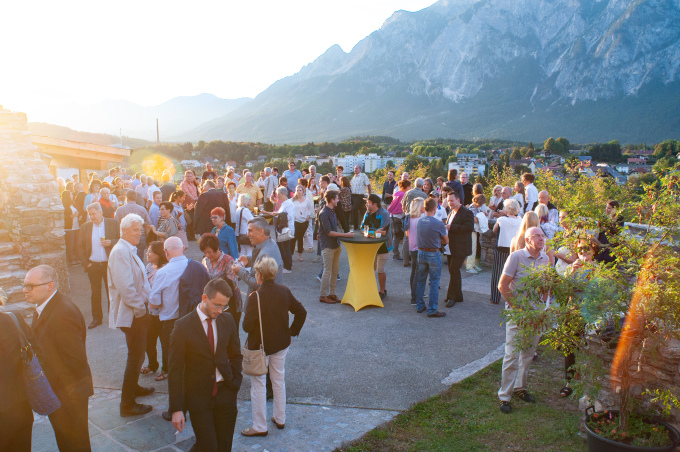
The audience plays a pivotal role in the event, effectively serving as the fourth member of the jury. This important role empowers members of the audience to actively participate in the voting process by scanning a provided QR Code to submit their placement choices. Their input not only impacts the overall outcome of the event but also contributes to the determination of the coveted audience choice award. This inclusion adds an exciting and interactive element to the proceedings, bridging the gap between the performers and the audience, and ensuring that their preferences and opinions are fully integrated into the event’s results.
 CARINTHIA JAZZ